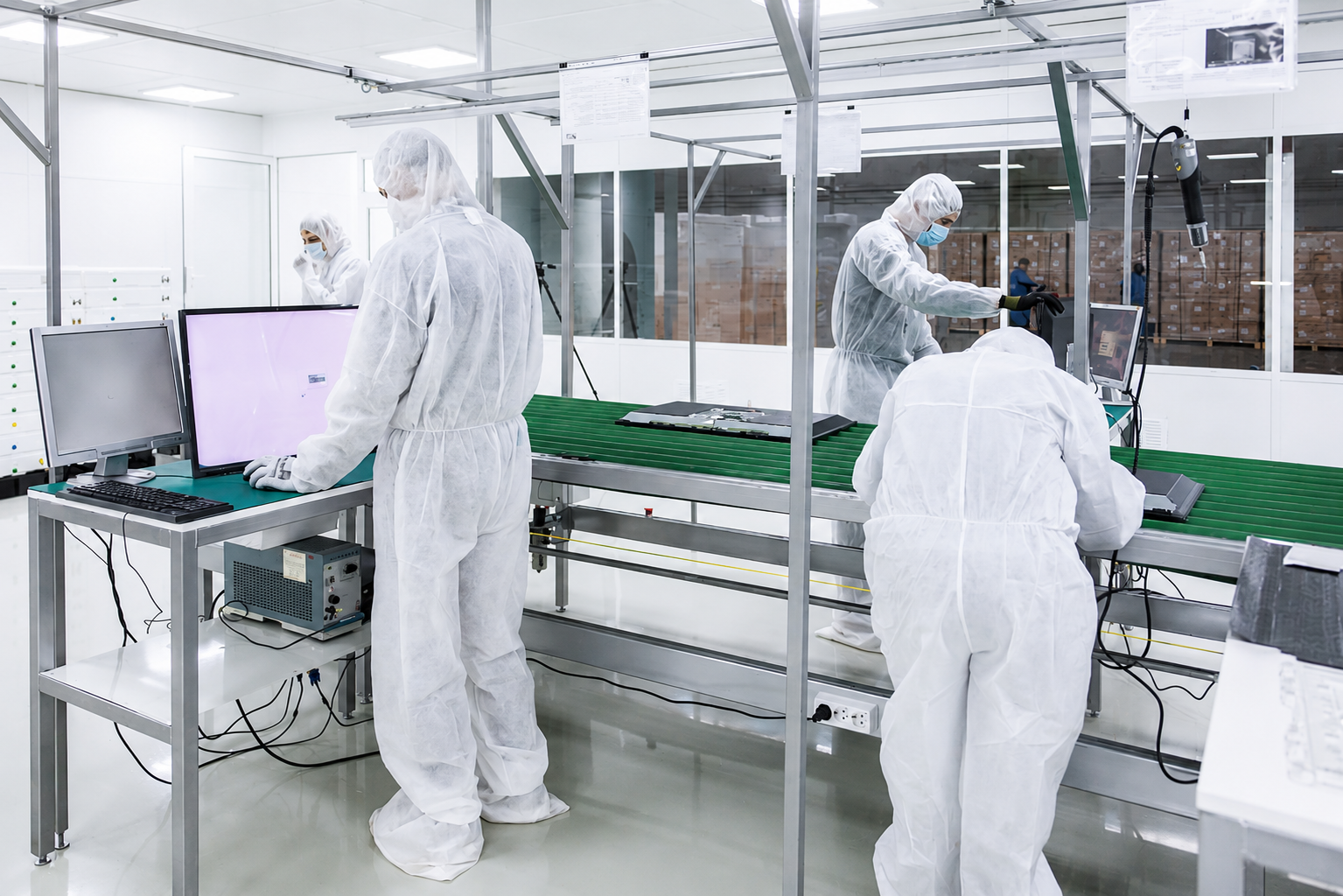
Pharmaceutical cleanrooms are expected to do more than meet today’s production targets—they must be ready for tomorrow’s products, regulations, and capacity demands. As manufacturing portfolios diversify and speed-to-market becomes critical, facilities designed without scalability often struggle to adapt. Modular cleanroom scalability planning addresses this challenge by embedding flexibility, expandability, and compliance into the cleanroom design from the outset, enabling growth without compromising operational continuity or regulatory integrity.
Modular cleanroom scalability planning by Clean Room Design Consultants India enables pharmaceutical facilities to expand efficiently without operational disruption. By integrating Clean Room Design Consultants India expertise in flexible layouts, prefabricated cleanroom systems, and GMP-compliant engineering, facilities remain future-ready, compliant, and capable of supporting increasing production demands seamlessly.
What Is Modular Cleanroom Scalability?
Modular cleanroom scalability refers to the intentional design of cleanroom facilities using modular construction, standardized systems, and expandable layouts that allow capacity or process changes with minimal downtime, rework, and compliance risk.
Unlike traditional fixed cleanrooms, modular systems support phased expansion while maintaining GMP integrity.
Why Scalability Matters in Pharmaceutical Cleanrooms
Pharma cleanrooms must respond to:
- Product pipeline evolution
- Capacity ramp-up requirements
- Regulatory updates (e.g., EU GMP Annex 1)
- Technological advancements in processing and containment
Facilities lacking scalability often face costly shutdowns, extensive revalidation, and compliance risks during expansion.
Core Principles of Modular...
Pharmaceutical cleanrooms are expected to do more than meet today’s production targets—they must be ready for tomorrow’s products, regulations, and capacity demands. As manufacturing portfolios diversify and speed-to-market becomes critical, facilities designed without scalability often struggle to adapt. Modular cleanroom scalability planning addresses this challenge by embedding flexibility, expandability, and compliance into the cleanroom design from the outset, enabling growth without compromising operational continuity or regulatory integrity.
Modular cleanroom scalability planning by Clean Room Design Consultants India enables pharmaceutical facilities to expand efficiently without operational disruption. By integrating Clean Room Design Consultants India expertise in flexible layouts, prefabricated cleanroom systems, and GMP-compliant engineering, facilities remain future-ready, compliant, and capable of supporting increasing production demands seamlessly.
What Is Modular Cleanroom Scalability?
Modular cleanroom scalability refers to the intentional design of cleanroom facilities using modular construction, standardized systems, and expandable layouts that allow capacity or process changes with minimal downtime, rework, and compliance risk.
Unlike traditional fixed cleanrooms, modular systems support phased expansion while maintaining GMP integrity.
Why Scalability Matters in Pharmaceutical Cleanrooms
Pharma cleanrooms must respond to:
- Product pipeline evolution
- Capacity ramp-up requirements
- Regulatory updates (e.g., EU GMP Annex 1)
- Technological advancements in processing and containment
Facilities lacking scalability often face costly shutdowns, extensive revalidation, and compliance risks during expansion.
Core Principles of Modular Cleanroom Scalability Planning
1. Master Planning with Expansion Logic
Scalability begins at the master planning stage. Facilities should be designed with:
- Defined expansion zones
- Reserved utility corridors
- Structural allowances for future loads
Clear expansion logic prevents disruption to validated operations.
2. Modular Architectural Systems
Using prefabricated wall panels, ceilings, and floor systems enables:
- Faster installation and modification
- Consistent cleanroom performance
- Simplified reconfiguration
Modular architecture reduces construction time and validation impact.
3. Scalable HVAC & Utility Design
Utilities often limit expansion. Modular planning ensures:
- HVAC systems designed with capacity margins
- Zoning that allows independent cleanroom expansion
- Plug-and-play utility connections
This avoids oversized systems while maintaining future readiness.
4. Flexible Process & Equipment Integration
Scalable cleanrooms accommodate process evolution by:
- Allowing equipment replacement without layout disruption
- Supporting single-use and hybrid technologies
- Providing adaptable service panels and interstitial spaces
This flexibility supports both current and future manufacturing models.
5. GMP-Compliant Change Management
Scalable design must align with GMP change control. Modular cleanrooms enable:
- Localized changes with minimal requalification
- Reduced impact on adjacent validated areas
- Clear documentation trails for regulatory review
This improves speed-to-market for new products.
Benefits of Modular Cleanroom Scalability
Pharmaceutical manufacturers gain:
- Faster capacity expansion
- Reduced downtime and revalidation effort
- Lower lifecycle costs
- Improved regulatory confidence
- Future-proof infrastructure
Scalability transforms expansion from a disruption into a controlled process.
Conclusion
Modular cleanroom scalability planning enables pharmaceutical facilities to grow intelligently, respond quickly to market demands, and maintain compliance throughout change. By embedding flexibility into cleanroom design, manufacturers gain long-term agility without compromising quality or regulatory integrity.
Scalable cleanrooms are not just a construction choice—they are a strategic investment in operational resilience.