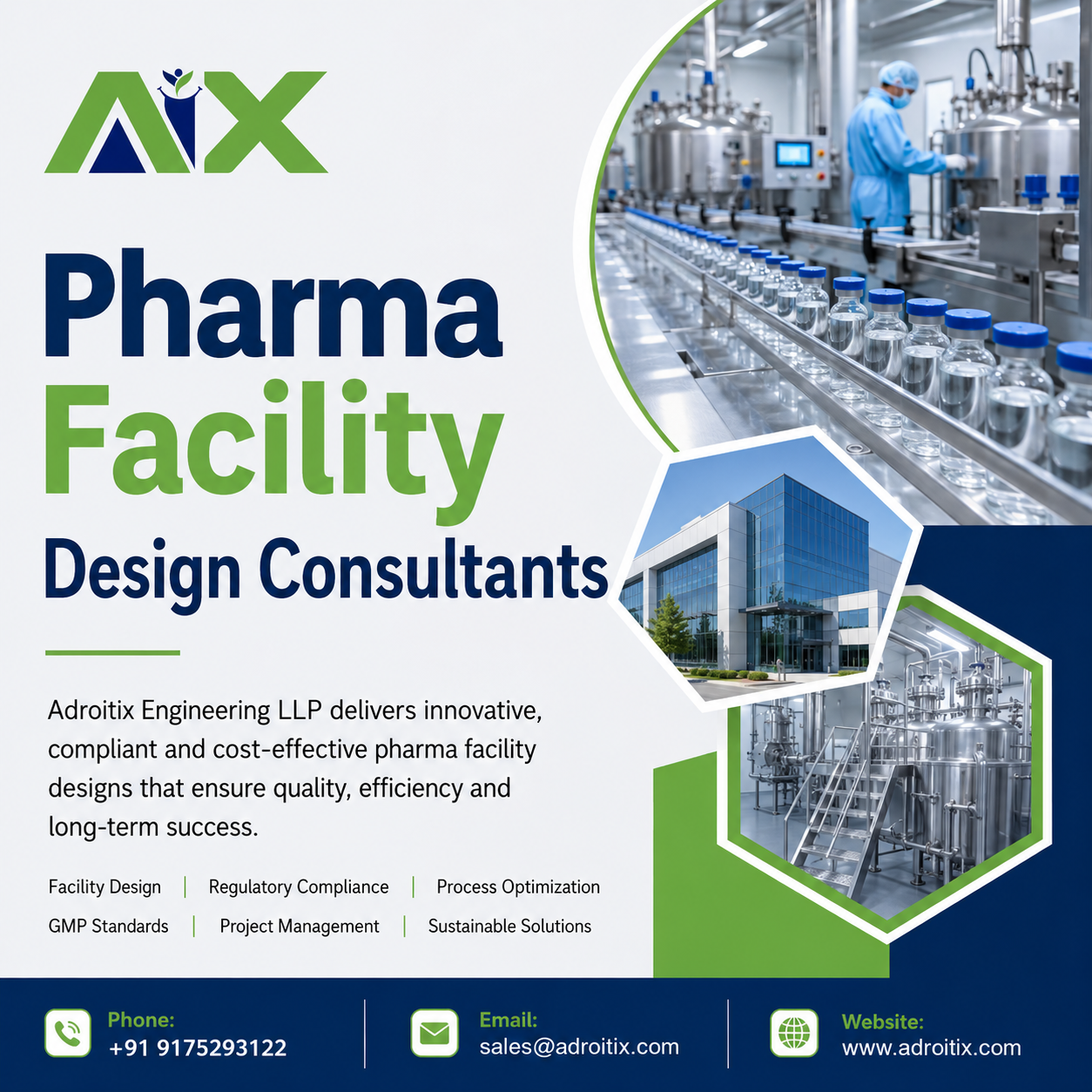
In pharmaceutical manufacturing, the quality of a product begins long before production starts. It starts with the facility itself.
Every cleanroom layout, HVAC system, process flow, utility network, and compliance strategy influences product quality, operational efficiency, and regulatory success. This is why pharmaceutical companies increasingly rely on Pharma Facility Design Consultants not merely as engineering service providers, but as strategic partners who help transform ambitious manufacturing goals into compliant, efficient, and scalable facilities.
As global pharmaceutical markets evolve and regulatory expectations become more demanding, facility design has become one of the most critical investments a company can make.
Why Facility Design Matters More Than Ever
A pharmaceutical facility is far more than a production building. It is a highly controlled environment where science, engineering, compliance, and operational efficiency must work together seamlessly.
- Poor facility planning can lead to:
- Production bottlenecks
- Regulatory observations
- Increased contamination risks
- Higher operating costs
- Delayed product launches
- Expensive retrofits
In contrast, a well-designed facility supports smooth operations, faster regulatory approvals, improved product quality, and long-term business growth.
This is where experienced Pharma Facility Design Consultants add significant value.
What Do Pharma Facility Design Consultants Do?
Specialized consultants focus on planning, engineering, and delivering manufacturing environments that comply with global pharmaceutical regulations while supporting operational excellence.
Their expertise typi...
In pharmaceutical manufacturing, the quality of a product begins long before production starts. It starts with the facility itself.
Every cleanroom layout, HVAC system, process flow, utility network, and compliance strategy influences product quality, operational efficiency, and regulatory success. This is why pharmaceutical companies increasingly rely on Pharma Facility Design Consultants not merely as engineering service providers, but as strategic partners who help transform ambitious manufacturing goals into compliant, efficient, and scalable facilities.
As global pharmaceutical markets evolve and regulatory expectations become more demanding, facility design has become one of the most critical investments a company can make.
Why Facility Design Matters More Than Ever
A pharmaceutical facility is far more than a production building. It is a highly controlled environment where science, engineering, compliance, and operational efficiency must work together seamlessly.
- Poor facility planning can lead to:
- Production bottlenecks
- Regulatory observations
- Increased contamination risks
- Higher operating costs
- Delayed product launches
- Expensive retrofits
In contrast, a well-designed facility supports smooth operations, faster regulatory approvals, improved product quality, and long-term business growth.
This is where experienced Pharma Facility Design Consultants add significant value.
What Do Pharma Facility Design Consultants Do?
Specialized consultants focus on planning, engineering, and delivering manufacturing environments that comply with global pharmaceutical regulations while supporting operational excellence.
Their expertise typically covers:
Facility Master Planning
Before detailed design begins, consultants evaluate:
- Product portfolio requirements
- Production capacity targets
- Future expansion plans
- Regulatory expectations
- Utility demands
- Material and personnel flow
This early planning phase establishes a strong foundation for the entire project.
Process and Facility EngineeringConsultants translate manufacturing requirements into functional facility designs, including:
- Production areas
- Cleanrooms
- Warehousing
- Quality control laboratories
- Utility systems
- Equipment layouts
The objective is to create efficient workflows while minimizing contamination risks and operational inefficiencies.
GMP Compliance Integration
Compliance cannot be added after construction—it must be designed into the facility from day one.
Consultants ensure alignment with:
- WHO GMP guidelines
- EU GMP requirements
- US FDA expectations
- PIC/S standards
- Local regulatory requirements
This proactive approach reduces compliance risks and simplifies future inspections.
The Growing Complexity of Modern Pharmaceutical Facilities
Today's pharmaceutical facilities are significantly more sophisticated than those built a decade ago.
Manufacturers are investing in:
- Biopharmaceutical production facilities
- Cell and gene therapy manufacturing
- High-potency API facilities
- Continuous manufacturing systems
- Digital manufacturing platforms
These advanced operations require specialized engineering expertise that extends beyond conventional industrial design.
Organizations often seek support from Pharma design consultants in Mumbai to navigate these complexities while maintaining safety, efficiency, and regulatory compliance.
How Facility Design Directly Impacts Product Quality
One of the most overlooked aspects of pharmaceutical manufacturing is the relationship between facility design and product quality.
For example:
- A poorly designed material flow can increase cross-contamination risks.
- Inadequate HVAC zoning may compromise environmental control.
- Insufficient segregation can create compliance challenges during regulatory inspections.
Effective facility design addresses these risks before they become operational problems.
A properly engineered HVAC system design for pharma facilities plays a critical role in maintaining environmental control, product quality, and regulatory compliance.
Sustainability Is Becoming a Competitive Advantage
Sustainability is no longer a secondary consideration in pharmaceutical engineering.
Modern consultants increasingly incorporate:
- Energy-efficient HVAC systems
- Water conservation strategies
- Heat recovery technologies
- Smart building automation
- Sustainable construction practices
These initiatives help manufacturers reduce operating expenses while supporting environmental goals and ESG commitments.
The result is a facility that performs efficiently both operationally and financially.
Supporting the Entire Facility Lifecycle
Leading Pharma Facility Design Consultants do much more than produce engineering drawings.
Many provide end-to-end support across the facility lifecycle, including:
Concept Design
Developing project strategies and feasibility studies.
Detailed Engineering
Creating comprehensive engineering packages for construction and implementation.
Procurement Support
Assisting with equipment specifications and vendor evaluations.
Construction Management
Monitoring project execution to ensure quality and compliance.
Commissioning, Qualification, and Validation (CQV)
Verifying that systems perform as intended and meet regulatory requirements.
This integrated approach improves project coordination and reduces costly delays.
What to Look for in a Design Partner
Choosing the right consulting partner can significantly influence project success.
Key evaluation criteria include:
Industry Experience
Look for demonstrated expertise in pharmaceutical, biopharmaceutical, and API facilities.
Regulatory Knowledge
Consultants should have a deep understanding of global GMP expectations.
Multidisciplinary Capabilities
The best firms offer integrated services covering:
- Process engineering
- Architectural design
- HVAC engineering
- Utility systems
- Electrical engineering
- Automation
- CQV
Scalability Expertise
Facilities should be designed not only for today's production needs but also for future growth.
Many organizations evaluating Pharma design consultants in Maharashtra prioritize long-term scalability and lifecycle performance when selecting a consulting partner.
The Future of Pharmaceutical Facility Design
The next generation of pharmaceutical facilities will be defined by flexibility, digital integration, and sustainability.
- Emerging trends include:
- Smart manufacturing environments
- Digital twins
- Predictive maintenance systems
- Modular facility design
- Advanced automation
- AI-assisted operational monitoring
As these technologies become mainstream, Pharma Facility Design Consultants will play an increasingly important role in helping manufacturers remain competitive and compliant.
Final Thoughts
The success of a pharmaceutical manufacturing operation depends on far more than production equipment and quality systems. It begins with a facility designed to support compliance, efficiency, scalability, and innovation.
Modern engineering firms such as Adroitix Engineering LLP bring together engineering expertise, regulatory knowledge, and strategic planning to create environments where high-quality medicines can be manufactured safely and efficiently.
For pharmaceutical and biopharmaceutical companies investing in new facilities or upgrading existing operations, choosing the right design partner is not simply an engineering decision—it is a business decision that can influence performance, compliance, and growth for years to come.
Frequently Asked Questions (FAQs)
Q. What is a pharma facility design consultant?
A pharma facility design consultant specializes in planning, engineering, and developing pharmaceutical manufacturing facilities that comply with regulatory requirements while supporting efficient operations.
Q. Why are pharmaceutical facility consultants important?
They help ensure GMP compliance, improve operational efficiency, reduce contamination risks, and support successful facility expansion and modernization projects.
Q. What services do pharma facility design consultants provide?
Services typically include facility planning, engineering design, cleanroom design, HVAC systems, utility design, project management, construction support, and CQV services.
Q. How does facility design affect pharmaceutical compliance?
Facility design directly influences contamination control, material flow, environmental monitoring, and operational processes that regulators evaluate during inspections.
Q. When should a pharmaceutical company engage a facility design consultant?
Ideally, consultants should be involved during the earliest planning stages to ensure strategic decisions aligned with regulatory, operational, and business objectives.